
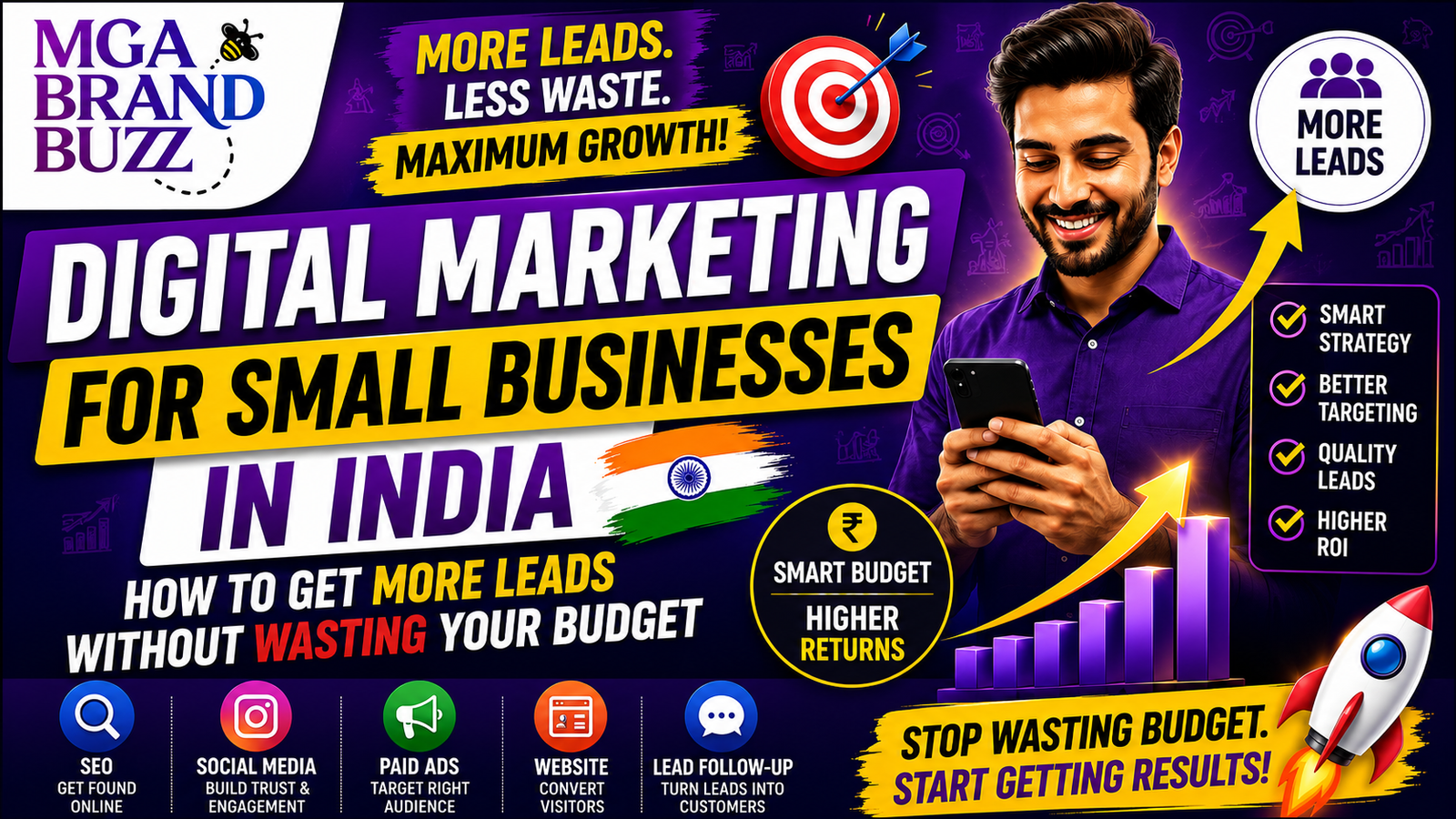
"Digital marketing pe paisa toh spend kar rahe hain… but leads kahan hain?"
If you're a small business owner in India, this question has probably crossed your mind more than once. Every month, businesses invest in social media posts, Facebook and Instagram ads, Google Ads, SEO, websites, and content marketing. They receive likes, shares, comments, impressions, and website visits — but when it comes to actual enquiries and sales, the results often fall short.
The reality is that digital marketing isn't about spending more money. It's about spending your marketing budget strategically. A well-planned digital marketing system can generate qualified leads, improve conversions, and deliver measurable business growth without wasting your hard-earned money.
In this guide, we'll explore where small businesses commonly lose money, how to fix those mistakes, and how to build a digital marketing strategy that consistently generates leads.
Why Digital Marketing Matters More Than Ever
Today's customers begin their buying journey online. Whether they're looking for a local restaurant, a construction company, a fashion boutique, or an IT service provider, their first instinct is to search on Google or social media.
If your business isn't visible where your customers are searching, your competitors will capture those opportunities instead.
Digital marketing helps businesses:
- Increase brand awareness
- Reach the right audience
- Generate qualified leads
- Build customer trust
- Improve sales
- Measure marketing ROI
Unlike traditional advertising, digital marketing allows you to track every click, enquiry, and conversion, making it easier to understand what's working and what needs improvement.
Where Small Businesses Often Waste Their Marketing Budget
Many businesses start digital marketing without a clear strategy. As a result, they spend money on activities that create visibility but fail to generate customers.
Some common mistakes include:
- Boosting social media posts without proper audience targeting
- Running Google or Meta Ads without clear campaign objectives
- Posting daily content without a content strategy
- Targeting everyone instead of a specific customer segment
- Spending heavily on awareness campaigns while ignoring lead generation
- Focusing only on followers and likes instead of qualified enquiries
- Driving traffic to a poorly designed website
- Not following up with leads promptly
- Ignoring SEO and relying entirely on paid advertising
- Measuring success using vanity metrics instead of business outcomes
Bigger Budget Doesn't Always Mean Better Results
Many business owners assume that increasing their advertising budget will automatically increase sales. Unfortunately, that's rarely true.
If your marketing funnel has problems, increasing your ad spend simply means you'll spend more money on the same inefficient system.
Instead of asking "How can I spend more?" — ask "How can I improve my marketing system?"
A small, well-optimized campaign often delivers better ROI than a large campaign with poor targeting.
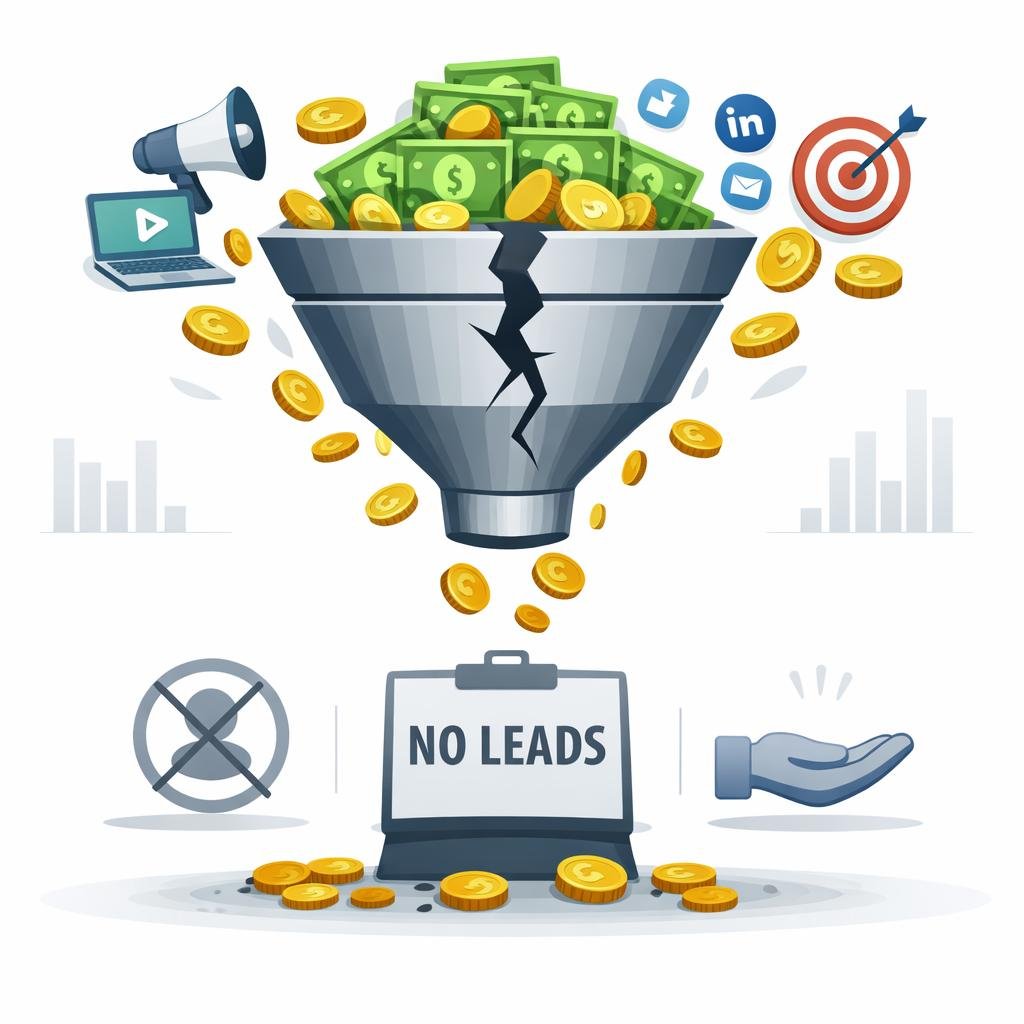
Build a Complete Lead Generation System
Successful digital marketing isn't just about ads or social media. It's about creating a complete customer journey.
Step 1: Understand Your Ideal Customer
Before spending a single rupee on marketing, define your ideal customer. Ask yourself:
- Who needs my product?
- What problems do they face?
- What solutions are they searching for?
- Which platforms do they use?
- What influences their buying decisions?
When you know your audience, your marketing becomes more effective and less expensive.
Step 2: Invest in SEO
Search Engine Optimization helps your business appear when potential customers actively search for products or services. Unlike paid advertising, SEO continues generating traffic even after your campaign ends — higher Google rankings, consistent organic traffic, better brand credibility, lower long-term marketing costs, and better quality leads. For local businesses, local SEO and an optimized Google Business Profile are especially important. Our SEO services are built to fix exactly this.
Step 3: Create Valuable Content
Don't use social media only for promotions. Instead, educate your audience with industry tips, customer success stories, before-and-after results, FAQs, behind-the-scenes content, product demonstrations, and expert advice. Helpful content builds trust, and trust drives conversions. Our Social Media Marketing team builds exactly this kind of content strategy.
Step 4: Use Paid Advertising Strategically
Google Ads and Meta Ads can generate excellent results when used correctly. Instead of boosting every post, create campaigns with specific objectives — website traffic, lead generation, phone calls, WhatsApp enquiries, or product sales. Target audiences based on location, interests, demographics, and search intent to improve campaign performance.
Step 5: Build a Conversion-Focused Website
Your website should do more than look attractive. It should convert visitors into customers, with a clear value proposition, fast loading speed, mobile-friendly design, easy navigation, strong calls-to-action, testimonials, service pages, contact forms, and WhatsApp integration. A good website acts as your 24/7 salesperson. Our Web Development team builds exactly this kind of site.
Step 6: Optimize Your Google Business Profile
For local businesses, Google Business Profile is one of the most valuable marketing tools. An optimized profile helps customers find your business, read reviews, view photos, get directions, call directly, and visit your website. Regular updates and customer reviews improve local search visibility.
Step 7: Follow Up Every Lead
Generating leads is only half the job. Many businesses lose customers simply because nobody follows up quickly. Create a structured follow-up process using phone calls, WhatsApp messages, emails, CRM software, and automated reminders. Fast follow-ups significantly improve conversion rates.
Stop Measuring Likes — Start Measuring Business Growth
Imagine two campaigns.
Campaign A
150,000 views, 2,500 likes, and just 12 enquiries.
Campaign B
25,000 views, 250 likes, but 70 qualified enquiries.
Which campaign is more successful? The answer is obvious. Instead of tracking vanity metrics, monitor business metrics.
Important KPIs include:
- Cost Per Lead (CPL)
- Conversion Rate
- Customer Acquisition Cost (CAC)
- Return on Ad Spend (ROAS)
- Website Conversion Rate
- Lead-to-Customer Ratio
- Customer Lifetime Value (CLV)
These metrics provide a clear picture of your marketing performance.
How AI Is Changing Digital Marketing
Artificial Intelligence is transforming the way businesses market their products and services. AI tools help businesses:
- Generate content faster
- Improve customer support through chatbots
- Personalize marketing campaigns
- Predict customer behavior
- Analyze campaign performance
- Automate repetitive marketing tasks
Small businesses can now compete with larger companies by using affordable AI-powered marketing tools.
Build a Marketing Funnel Instead of Random Campaigns
An effective marketing system follows a simple journey:
Each step supports the next. When all these components work together, your marketing budget becomes far more efficient. Explore our full range of digital marketing services to see how each piece fits together as a system.
Before Increasing Your Marketing Budget, Ask These Questions
Before spending more money on advertising, ask yourself:
- Who is my ideal customer?
- What problem does my business solve?
- Which marketing channel generates my best leads?
- Is my website converting visitors into enquiries?
- Do I have a proper lead follow-up process?
- Can I measure my marketing ROI?
- Which campaigns generate actual sales?
If you can't confidently answer these questions, increasing your budget may simply increase your marketing waste.
Frequently Asked Questions
How much should a small business spend on digital marketing?
A good starting point is allocating 5–10% of your monthly revenue, depending on your industry and growth goals.
Is SEO better than Google Ads?
Both serve different purposes. SEO delivers long-term organic traffic, while Google Ads provide immediate visibility and faster lead generation.
How long does SEO take?
SEO is a long-term strategy. Meaningful improvements typically take several months, depending on competition and your website's current performance.
Can social media alone generate sales?
Social media builds awareness and trust, but it works best when combined with a strong website, landing pages, and an effective follow-up process.
Final Thoughts
By understanding your audience, investing in SEO, creating valuable content, running targeted advertising, optimizing your website, tracking meaningful metrics, and following up with every lead, you can turn digital marketing into a reliable engine for business growth.
Instead of chasing likes and followers, focus on building a measurable system that attracts the right audience, generates genuine enquiries, and converts those enquiries into loyal customers.
At MGA Brand Buzz, we help businesses move beyond random marketing activities by creating integrated digital marketing strategies that include SEO, social media marketing, performance advertising, website development, lead generation, and conversion optimization.
Ready to stop wasting your marketing budget? Contact MGA Brand Buzz today and let's build a strategy that delivers measurable business growth.